
You notice a wet spot on the ceiling downstairs. Or water damage on the wall. You smell something musty in the bathroom. But you can’t see a leak. The pipes are hidden inside walls. You’re wondering: where is this leak? How serious is it? How much will it cost to fix?. Understanding the complete bathroom plumbing guide for Pittsburgh helps you see how hidden leaks fit into your overall plumbing system and what preventative steps actually work.
Hidden bathroom pipe leak problems are serious. Water damage increases daily. Mold grows. Structural damage happens. But you can’t see the leak. It’s inside walls. Inside floors. Hidden from view. That’s what makes these leaks dangerous. They’re expensive. They’re scary. They need professional help.
This guide covers everything about hidden bathroom pipe leak problems. Why pipes leak. Pipe leak signs to watch for. How hidden leak detection works. Leaking bathroom pipes solutions. Water leak repair options. Costs in Pittsburgh. When to call professionals immediately. By the end, you’ll understand the problem. You’ll know warning signs. You’ll know what to do.
Why Bathroom Pipe Leak Happens
Understanding causes helps you prevent future leaks.
Old Pipes Corrode
Pittsburgh homes often have old pipes. 50+ years old sometimes. Galvanized pipes rust over time. Copper pipes develop pinhole leaks. Old pipes fail. Water leaks. Leaking bathroom pipes are common in older homes.
Understanding why pipes leak is important, but knowing how to maintain your plumbing system prevents these problems from happening in the first place. Our complete bathroom plumbing guide covers bathroom plumbing systems, maintenance tips, and how to keep your pipes healthy.
Corrosion is inevitable. Metal ages. Reacts to water chemistry. Pittsburgh’s hard water accelerates corrosion. Scale builds up inside pipes. Weakens them. Leaks develop.

Water Pressure Issues
High water pressure stresses pipes. Pipes weren’t designed for it. Cracks develop. Leaks start. Pittsburgh water pressure varies by neighborhood. Some areas have higher pressure. Increases leak risk.
Improper Installation
Bad installation causes early failures. Pipes not secured. Pipes not pitched correctly. Joints not sealed properly. These mistakes cause leaks. Sometimes visible. Sometimes hidden.
Tree Root Intrusion
Roots grow toward water sources. Sometimes they penetrate pipes. Create cracks. Water escapes. Tree roots find sewer lines especially. But main water lines too.
Frozen Pipes
Pittsburgh winters freeze pipes. Water inside pipes freezes. Expands. Cracks pipes. When it thaws, water leaks. Usually noticeable. But sometimes it’s small leak. Hard to detect.
Joint Failures
Pipes connect at joints. Seals fail over time. Water leaks at connections. Especially under sinks. Behind walls. Hard to see. But definitely leaking.
Pipe Leak Signs: What to Watch For
Catching leaks early prevents major damage.
Water Stains
Brown or yellow stains on ceilings. On walls. On floors. Indicates water damage. Points to leak location. Usually above the stain. Behind the wall. Inside the ceiling cavity.
Stains that grow larger indicate active leak. Or recent heavy water damage. Investigate immediately.
Soft or Spongy Drywall
Touch walls. Feel soft spots. Indicates water damage inside. Drywall is saturated. Structural compromise. Danger sign. Investigate.
Mold or Mildew Smell
Musty smell indicates moisture. Mold growing. Indicates leak somewhere nearby. Not always visible. But definitely present. Strong indicator of problem.
Increased Water Bill
Water bill suddenly higher? Meter shows usage you didn’t create? Hidden bathroom pipe leak wastes water. Check meter. Turn off all water. Check meter again. If it moves, leak confirmed.
Visible Water Pooling
Water pooling under sink. Behind toilet. In corner. Indicates leak nearby. Source might be hidden. But presence of water confirms problem.
Sound of Running Water
Hear water running when nothing is on? Leak confirmed. Water flowing through pipe. Escaping somewhere. Sound helps locate problem. Professional can pinpoint it.
Low Water Pressure
One fixture or whole house. Low pressure indicates problem. Could be hidden leak. Could be other issues. But leaks definitely reduce pressure. Catching these warning signs early through regular preventative plumbing maintenance is your best defense against expensive hidden leak disasters monthly checks take 10 minutes but save thousands.
Bubbling Paint or Wallpaper
Paint bubbling. Wallpaper peeling. Indicates moisture behind. Leak is present. Causing water damage. Paint and wallpaper failing.
How Hidden Leak Detection Works
Professionals have tools to find hidden leaks.
Listening Devices
Acoustic equipment detects water flow in pipes. Professional places device on pipe. Listens. Hears water flow. Identifies where leak is. Pinpoints location. Very effective.
Cost: $100-$200 for this service. While these costs seem high,Professional pipe repair services save thousands by pinpointing exact leak locations preventing unnecessary wall demolition and guesswork repairs.
Thermal Imaging
Infrared camera detects temperature differences. Water is cooler than surrounding area. Camera shows cold spots. Indicates leak location. Visualizes problem. Shows exactly where.
Cost: $200-$400 for thermal imaging.
Dye Testing
Plumber injects dye into water system. Watches where dye appears. If it leaks into walls, dye shows up. Indicates exact location. Shows severity.
Cost: $75-$150.
Pressure Testing
System is pressurized. Pressure gauge monitors. If pressure drops, leak confirmed. How fast it drops indicates leak severity. Small leak = slow pressure drop. Large leak = fast drop.
Cost: $100-$200.
Visual Inspection
Professional inspects accessible pipes. Under sinks. In basements. In crawlspaces. Looks for water. Looks for corrosion. Looks for damage. Sometimes leak is visible if you look.
Cost: $75-$150.
Video Camera Inspection
Snake camera goes inside pipe. Shows interior. Shows cracks. Shows corrosion. Shows where clog or damage is. Very accurate.
Cost: $200-$400.
Water Leak Repair: Solutions for Hidden Bathroom Pipe Leak
Once leak is found. Fix it.
Pinhole Leak Repair
Small holes in copper pipes. Common failure. Options: patch it or replace section.
Epoxy putty can patch temporarily. Not permanent. Eventually fails. Professional repair: replace pipe section. Cost: $200-$600 depending on location.
Crack Repair
Pipe has crack. Water leaks. Options: patch or replace.
Small cracks can be wrapped with plumber’s tape. Temporary fix. Won’t last long. Real fix: replace pipe section. Cost: $300-$800.
Joint Repair
Connection between pipes leaks. Seal has failed. Fix: replace coupling. Disconnect pipes. Remove old coupling. Install new one. Reconnect.
Cost: $100-$300 usually.
Section Replacement
Large leak or severe damage. Entire pipe section needs replacement. Cut out damaged section. Install new pipe. Reconnect. Properly secured. Sealed.
Cost: $400-$1,200 depending on length and location.
Rerouting
Sometimes pipe can’t be accessed easily. New route is better. Run pipe different direction. Avoids wall damage. Avoids future problems. More work. More expensive. But sometimes necessary.
Cost: $800-$2,000+ depending on extent.
Whole-Home Repiping
If many leaks. Multiple failures. Consider repiping entire home. Replace all old pipes. Modern materials. Copper or PEX plastic. Prevents future problems.
Cost: $5,000-$15,000+ depending on home size.
Leaking Bathroom Pipes Inside Walls
Inside-wall leaks are worst case.
Why They’re Serious
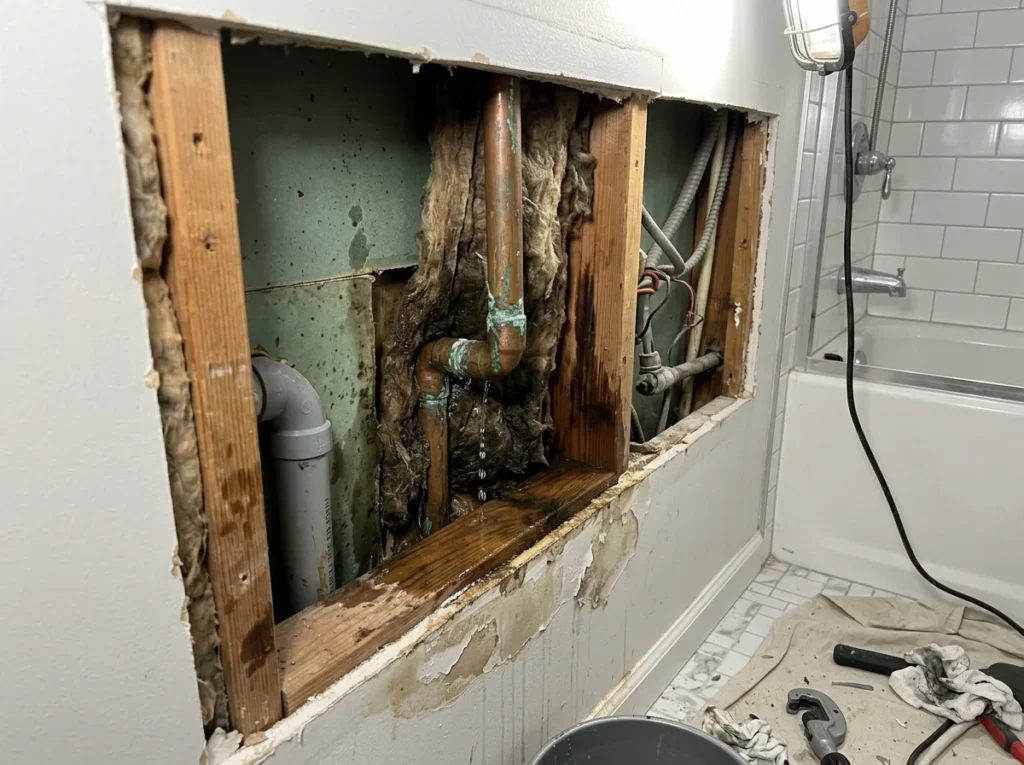
Water damage spreads. Drywall gets wet. Insulation gets wet. Wood framing rots. Mold grows. All hidden. Damage compounds daily. By time you find it, extensive damage exists.
Detection Challenges
Leak is hidden. Hard to find. Requires professional tools. Can’t see it. Can’t smell it always. Might only notice ceiling stain months later.
Repair Complications
Finding leak location is complex. Sometimes requires cutting into walls. Walls might need replacement. Insulation might need replacement. Drywall might need replacement. Water-damaged materials removed.
Prevention is Best
Best strategy is prevention. Inspect pipes regularly. Listen for sounds. Watch for stains. Check water meter. Catch problems before they become hidden leaks.
Pittsburgh-Specific Hidden Bathroom Pipe Leak Issues
Pittsburgh has unique challenges.
Hard Water Problems
Pittsburgh water is hard. Mineral scale builds up inside pipes. Weakens them. Creates cracks. Leads to leaks. Annual flushing helps. Water softening helps long-term.
Old Infrastructure
Many Pittsburgh homes are 50-100+ years old. Original pipes are very old. Corrosion is advanced. Failures are common. If home is old, expect pipe problems. Budget for repair or replacement.
Winter Freezing
Pittsburgh winters freeze pipes. Water inside freezes. Expands. Cracks pipe. When thaws, leak develops. Insulate pipes. Drain seasonally. Prevent freezing.
Soil Conditions
Some Pittsburgh areas have clay soil. Expands and contracts. Puts pressure on pipes. Causes movement. Joints fail. Leaks develop. Affects buried main line especially.
Water Chemistry
Pittsburgh water reacts with pipes. Galvanized pipes rust faster. Copper develops pinhole leaks. Treatment varies. Professional assessment helps. Understanding your water helps prevent problems.
Pittsburgh’s hard water, old infrastructure, and winter conditions all accelerate pipe problems. Regular bathroom plumbing maintenance prevents costly repairs by catching issues early before they become hidden leaks inside walls. Prevention is always cheaper than emergency repair.
Costs of Water Leak Repair
Real prices for Pittsburgh.
Minor Repairs
Visible leak repair: $150-$300.
Small pinhole patch: $150-$300.
Coupling replacement: $100-$250.
Moderate Repairs
Pipe section replacement: $300-$800.
Drywall access and repair: $400-$1,000.
Multiple joint repairs: $300-$700.
Major Repairs
Substantial inside-wall leak: $1,000-$3,000.
Rerouting pipe: $800-$2,000.
Whole-home repiping: $5,000-$15,000+.
These repair costs are real, but they’re only necessary if the leak isn’t caught early through maintenance. When you do need professional help, our professional water leak repair and pipe repair solutions team in Pittsburgh handles everything from detection to complete system replacement
FAQ About Hidden Bathroom Pipe Leak
How do I know if there’s a hidden leak?
Watch for warning signs. Water stains. Soft drywall. Musty smell. Higher water bill. Running water sounds. Pooling water. Any of these suggests leak. Call professional for inspection if suspicious.
Can hidden leaks be fixed without tearing down walls?
Sometimes. Depends on location and severity. Professional might access from basement. From crawlspace. From accessible area. If truly hidden behind walls, might require cutting. Depends on specific situation. Professional assessment determines.
How much water does a hidden leak waste?
Depends on leak size. Pinhole leak wastes 30-50 gallons daily. Small crack wastes 100+ gallons daily. Larger leak wastes 1,000+ gallons daily. Your water bill tells the story. Huge spike indicates serious leak. Address immediately.
Should I try to find the leak myself?
You can look for visible signs. Check under sinks. Look for stains. Listen for sounds. But actual pinpointing requires professional tools. Thermal imaging. Acoustic sensors. Pressure testing. DIY guessing wastes time. Professional diagnosis is faster. More accurate.
Can I ignore a small hidden leak?
Finding hidden leaks yourself is nearly impossible. Our bathroom plumbing inspection and leak detection services use professional tools like thermal imaging and acoustic sensors to pinpoint exactly where leaks are hiding so we can fix them before they cause expensive water damage..
How often should I check for leaks?
Monthly inspection of visible pipes. Quarterly check of meter. Listen for sounds regularly. After heavy rain, check for stains. After winter, inspect for freeze damage. Preventive vigilance catches problems early. Early detection prevents disaster.