You’re in the middle of something important. Suddenly your toilet breaks. Water backs up. Now you need emergency repairs. Cost is astronomical. You’re stressed. This could have been prevented. Regular bathroom plumbing maintenance catches problems early. Understanding Pittsburgh bathroom plumbing systems helps you know exactly what needs regular attention and why certain components fail faster in our local climate Prevents emergencies. Saves money. Saves stress.
Most homeowners ignore plumbing until something breaks. Wrong approach. Preventative maintenance catches problems before they become disasters. A small leak found early costs $200. Same leak found later costs $2,000+. The difference is maintenance.
This guide covers everything about bathroom plumbing care. Why bathroom plumbing maintenance matters. Plumbing inspection what to look for. Preventative maintenance steps. Regular maintenance benefits. Common issues prevention. How to avoid emergency repairs. Real costs. Smart strategies. By the end, you’ll understand how to keep your plumbing healthy. You’ll prevent problems. You’ll save money. You’ll avoid emergencies.
Why Bathroom Plumbing Maintenance Matters
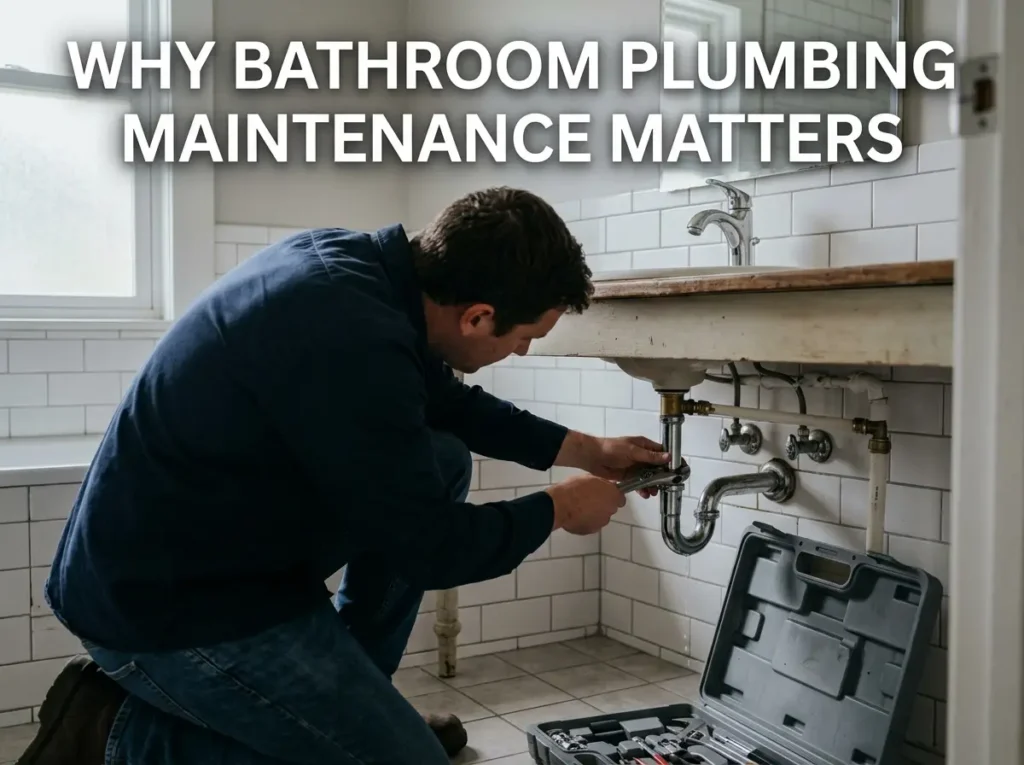
Prevention is always cheaper than repair.
Catching Problems Early
Small problems become big problems fast. Slow drain becomes clogged drain. Clogged drain backs up. Backup causes water damage. Water damage means mold. Mold means expensive remediation. One problem compounds.
Regular bathroom plumbing maintenance catches issues early. Small leak detected. Fixed immediately. Cost: $200. Same leak ignored. Becomes major water damage. Cost: $5,000+. Huge difference.
Extending Pipe Life
Pipes age. Regular maintenance extends their life. Flushing removes sediment. Prevents buildup. Prevents premature failure. Annual maintenance adds years to pipe life. Extends lifespan. Delays expensive replacement.
Understanding the complete bathroom plumbing system helps you maintain it properly. Our complete bathroom plumbing guide covers how all bathroom fixtures and pipes work together, common problems that develop, and why regular maintenance is the best defense against costly repairs
Avoiding Emergencies
Emergency plumbing calls cost more. After-hours fees. Weekend fees. Holiday fees. Emergency calls double or triple normal pricing. Regular maintenance prevents emergencies. Avoids high costs. Avoids disruption.
Water Conservation
Leaks waste water. Small leak wastes 50+ gallons daily. That’s thousands monthly. Detection and repair saves water. Saves money. Good for environment. Regular inspections catch leaks immediately.
Home Value
Potential buyers notice plumbing. Updated, well-maintained plumbing increases value. Poor plumbing decreases value. Maintenance protects investment. Maintains home value. Makes selling easier.
Understanding Plumbing Inspection: What to Look For
Knowing what to check helps you maintain your system.
Monthly Visual Check
Walk through bathroom. Look under sinks. Look around toilets. Look for water. Any pooling water? Any dampness? Any stains? These indicate problems. Check them out.
Listen for sounds. Dripping water. Running water when nothing is on. Strange noises. These indicate issues. Investigate.
Smell for odors. Musty smell indicates moisture. Bad smell indicates bacteria. These need attention.
Check Visible Pipes
Under sinks, you can see pipes. Look for corrosion. Green on copper. Rust on steel. These indicate aging. Plan for replacement.
Check connections. Are they tight? Any drips? Tighten loose connections. Fix drips immediately.
Pressure Test
Low water pressure indicates problems. Could be clogged aerator. Could be deeper issue. Check pressure at different fixtures. Same pressure everywhere means okay. Lower pressure one fixture means that fixture problem.
Drain Testing
Pour water down drains. Does it drain quickly? Or slowly? Slow indicates buildup. Address it. Don’t wait.
Listen to drains. Gurgling sounds indicate problems. Air trapped. Blockage forming. Prevention now stops problems later.
Preventative Maintenance: Steps to Take
Regular care prevents problems.
Monthly Tasks
Check under sinks for leaks. Look for water. Look for corrosion. Address immediately if found.
Test water pressure. Should be consistent. If low, investigate.
Listen to drains. Listen to pipes. Any unusual sounds? Investigate.
Check toilet fill valve. Is it running? Should stop within seconds of flushing. If running, fix it. Wastes water.
Quarterly Tasks
Clean aerators. Remove sediment. Improves water pressure. Takes 10 minutes. Easy maintenance.
Inspect visible pipes. Look for corrosion. Look for damage. Look for leaks. Address problems.
Flush water heater (if applicable). Removes sediment. Extends heater life. Annual or semi-annual depending on usage.
Test GFCI outlets in bathrooms. Press test button. Should cut power. Press reset button. Should restore power. If not working, replace outlet. Safety critical.
Annual Tasks
Professional plumbing inspection. Contractor assesses system. Checks visible pipes. Checks water pressure. Tests fixtures. Identifies problems early. Cost: $150-$300. Worth every penny.
Drain cleaning. Remove buildup. Clear pipes. Prevents clogs. Cost: $150-$300. Saves future emergency costs.
Check water heater. Look for corrosion. Look for leaks. Listen for sounds. Plan replacement if aging.
Review water bill. Spike indicates leak. Investigate immediately. Small leak detected saves money.
Common Issues Prevention
Knowing problems helps you prevent them.
Running Toilets
Most common issue. Water running constantly. Wastes water. Usually flapper worn. Or fill valve failing. Check monthly. Listen to running water. Address immediately.
Prevention: Don’t use toilet as trash can. Don’t flush wipes. Prevents flapper damage. Prevents clogs.
Slow Drains
Hair and soap buildup. Prevention: use drain screens. Clean screens regularly. Pour hot water monthly. Enzyme cleaner monthly. Prevents clogs.
Prevention is easier than dealing with clogs. Takes minutes. Saves hours of problems.
Low Water Pressure
Sediment buildup. Or aerator clogged. Prevention: clean aerators monthly. Flush pipes annually. Maintains pressure. Prevents problems.
Leaks
Many causes. Prevention: check regularly. Listen for drips. Feel for dampness. Catch leaks early. Fix immediately.
Many Pittsburgh homeowners don’t realize they have hidden bathroom pipe leaks until water damage is extensive regular maintenance catches these silent killers before they destroy walls and flooring
Many leaks start small and hidden. Catching them requires knowing what to listen for and what warning signs matter. Our guide on hidden bathroom pipe leak detection explains all the signs you should watch for musty smells, water stains, soft drywall and how professionals pinpoint leaks using specialized equipment when you can’t find them yourself
Mineral Buildup
Pittsburgh has hard water. Minerals accumulate. Prevention: flush water heater annually. Use water softener if extreme. Annual flushing helps immensely.
Mold and Mildew
Moisture creates mold. Prevention: ventilate bathroom. Run exhaust fan during showers. 30 minutes after showers. Removes moisture. Prevents mold.
Keep bathroom dry. Fix leaks immediately. Don’t let moisture linger.
Regular Maintenance Benefits: Why It’s Worth It
Benefits extend beyond just preventing repairs.
Cost Savings
Small repairs cost little. Emergency repairs cost a lot. Maintenance prevents emergencies. Saves thousands over time. Annual maintenance ($300-$500) prevents emergency calls ($2,000+). Math is obvious.
Time Savings
No emergency repairs means no disruption. No time off work. No stress. No emergency contractor calls. Maintenance saves time.
Stress Reduction
Home systems working properly. No surprises. No emergencies. Peace of mind. Can’t put price on that.
Extended Equipment Life
Regular maintenance extends life. Pipes last longer. Water heater lasts longer. Fixtures work longer. Everything lasts longer with care.
Better Water Quality
Regular cleaning removes sediment. Water quality improves. Better for health. Better for appliances. Everything benefits from clean water.
Higher Home Value
Maintained plumbing increases value. Buyers notice maintained systems. They’re willing to pay more. Maintenance protects investment.
DIY Preventative Maintenance Tasks
Do these yourself. Save money. Easy tasks.
Clean Aerators
Sediment clocks aerators. Unscrew it. Rinse sediment. Reinstall. Takes 5 minutes. Improves water pressure. Free task.
Check for Leaks
Walk bathroom. Look for water. Look for stains. Look for damage. Takes 5 minutes. Monthly task. Easy.
Test Drains
Pour water down drains. Listen. Time drainage. Takes 5 minutes per drain. Quick check.
Tighten Connections
Loose connections drip. Use wrench. Tighten gently. Don’t over-tighten. Easy fix. Takes 10 minutes.
Clear Drain Screens
Hair accumulates. Clear screens. Takes 2 minutes. Prevents clogs. Super easy.
Listen for Sounds
Strange noises indicate problems. Dripping. Running. Hissing. Investigate. Takes 5 minutes. Early detection saves money.
Professional Plumbing Inspection: When to Call
Some tasks need professionals. Scheduling an annual professional plumbing maintenance service costs $150-$300 but catches hidden problems DIY checks always miss saving you from $2,000+ emergency repairs.
Annual Inspection
Hire professional annually. Assess entire system. Check water pressure. Test fixtures. Identify problems. Cost: $150-$300. Worth it.
If You Suspect Issues
Running water sounds. Slow drains. Low pressure. Leaks. Professional inspection finds problems. Better than guessing.
Before Buying Home
Get inspection before purchase. Reveals hidden problems. Prevents surprises. Critical for new homeowners.
After Water Events
Flooding. Burst pipe. Heavy rain. Professional inspection checks for damage. Catches hidden problems.
Costs of Bathroom Plumbing Maintenance
Preventative maintenance costs less than repairs.
DIY Maintenance
Drain screens: $5-$15.
Cleaner products: $5-$20.
Time investment: Minimal.
Total: $20-$50 yearly for supplies.
Professional Annual Inspection
Professional assessment: $150-$300.
Drain cleaning: $150-$300 (if needed).
Total: $150-$600 yearly.
Comparison to Emergency Repairs
Emergency leak repair: $500-$2,000.
Emergency clog removal: $300-$800.
Emergency pipe replacement: $1,000-$5,000+.
Comparison obvious. Maintenance prevents expensive emergencies.
These emergency costs are why regular maintenance matters so much. When you skip preventative care and problems develop, emergency repair pricing is brutal. Our bathroom plumbing services include both maintenance inspections to prevent emergencies and emergency repair solutions when problems do occur, keeping your costs as low as possible
FAQ About Bathroom Plumbing Maintenance
How often should I have plumbing inspected?
Annually minimum. Especially in older Pittsburgh homes. Twice yearly if you have known issues. More frequently if you suspect problems. Annual inspection finds issues early. Cost is minimal compared to emergency repairs.
Can I do maintenance myself?
Yes for simple tasks. Clean aerators. Check for leaks. Listen for sounds. Clear screens. But professional annual inspection is important. They have tools. They see things you don’t. Professional assessment catches hidden problems.
What’s the most important maintenance task?
Regular visual inspection. Check monthly. Look for water. Look for stains. Look for damage. Early detection prevents disasters. Takes 10 minutes. Most important thing you can do.
Does preventative maintenance really save money?
Absolutely. Maintenance prevents emergencies. Emergency calls cost 3-5x normal price. Annual maintenance $300-$600. Emergency repair $2,000-$5,000+. Math is obvious. Maintenance saves thousands.
What should I do if I find a leak?
Fix immediately. Don’t wait. Water damage spreads daily. Small leak becomes big problem. Cost grows exponentially. Address leaks immediately. Call professional if you can’t fix. Don’t delay.
How can I avoid expensive emergency repairs?
Monthly inspection. Quarterly maintenance. Annual professional inspection. Catch problems early. Fix immediately. Regular care prevents emergencies. Discipline and attention save money. That’s the real strategy.