
That drip. Drip. Drip. The sound at night is driving you crazy. One drop every few seconds. Seems small, right? But it’s not. That one faucet is wasting thousands of gallons yearly. Your water bill’s climbing. You’re throwing money away literally.
Pittsburgh homes are old. A lot of them. Old plumbing means old faucets. And old faucets leak. It’s just what happens. The good news? Leaky faucet repair in Pittsburgh, PA is usually straightforward. Sometimes it’s a simple fix you can do yourself. Sometimes you need a plumber. But either way, it’s fixable and it’s worth fixing fast.
Faucet leaks are just one piece of your bathroom’s plumbing system. Understanding how everything connects helps you catch problems early. Start with our complete bathroom plumbing guide for Pittsburgh for the bigger picture
This guide walks you through what causes dripping tap problems, how to fix them yourself, when to call someone, and real costs. Plus how much water you’re wasting and why that matters. Pittsburgh’s got plenty of water, but that doesn’t mean you should waste it.
Why Your Faucet is Actually Leaking
Your faucet didn’t just decide to leak. Something inside failed. Understanding what helps you decide if you can fix it.
Most faucets work the same basic way. Water comes in from the supply line. A valve controls the flow. When you turn the handle off, the valve seals tight. No water should come through. But when that valve wears out, water drips through anyway. That’s your leak.
In Pittsburgh’s older homes, faucets are often 20-30+ years old. The rubber seals inside dry out. Metal parts corrode from hard water. Everything wears down. That’s normal aging. Nothing lasts forever. But the good news is replacement parts are cheap. A simple leaking faucet repair might just need new internal parts, not a whole new faucet.
Different faucets have different internals. Ball faucets. Cartridge faucets. Washer-based faucets. Ceramic disc faucets. Each type leaks differently. Understanding which type you have helps with the fix.
Types of Faucet Leaks (and What They Mean)
Not all leaky faucet problems are the same. The type of leak tells you what’s wrong.
Dripping from the spout. Water comes out even when you turn it off. This is the most common leak. Means the internal valve isn’t sealing. Debris’s stuck in there, or the seal’s worn. Usually fixable with new cartridge or washer. Could be $5-$30 in parts if you DIY. Or $75-$200 if you call a plumber.
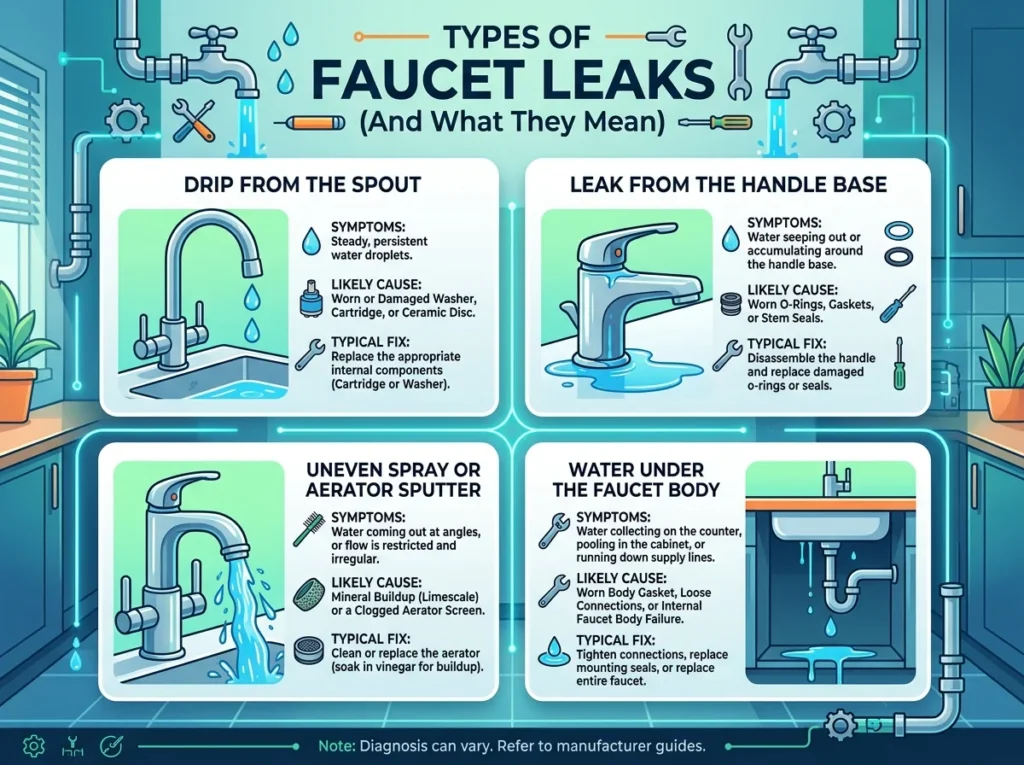
Leaking around the base. Water comes out where the faucet meets the sink. This is different. Means the base seal failed. Or caulking deteriorated. Usually needs the whole faucet removed and reinstalled. More involved than a dripping spout. Could be $100-$300 for a plumber.
Leaking from under the sink. You open the cabinet and water’s there. This means supply lines are damaged. Or connection points are loose. Could be serious. Might indicate water damage already started. This one needs a plumber. Could be $150-$500 depending on severity.
Leaks under the sink sometimes reveal another problem: slow or clogged drains. If you’re already working under there, check your drain connections too. See our guide on clogged drain solutions and cleaning for complete drain maintenance.
Slow constant drip vs. steady stream. A single drop every 10 seconds is one thing. A stream of water is another. Both need fixing, but steady stream is more urgent. Water waste is extreme.
Identifying which type you have helps determine if this is a DIY job or professional work.
Common Causes of Faucet Leaks in Pittsburgh
Pittsburgh’s water is relatively hard compared to some places. Hard water causes mineral buildup. This buildup affects faucet internals. Sediment gets stuck in valves. Aerators clog. Seals get damaged by mineral deposits.
Temperature changes also matter. Pittsburgh winters are cold. Pipes freeze sometimes. Frozen water in pipes creates pressure. That pressure damages faucet seals. When things thaw, leaks start. It’s why you might notice new leaks after winter.
Age is the biggest factor though. That Pittsburgh home built in 1970? The faucet’s probably original. Or at least 20+ years old. Original faucets from decades ago wear out. The rubber seals dry out. Metal corrodes. Everything gets brittle. Leaks happen. It’s inevitable with age.
Loose connections happen too. Plumbers install faucets. Over time, vibration from water flow loosens fittings. Connections work themselves loose. A simple tightening fixes this. But you need to find the leak first.
DIY Fixes for Dripping Faucets (When It’s Safe)
Some leaking faucet repair you can handle yourself. Here’s what’s realistic for homeowners.
Tighten connections. If water’s leaking from under the sink, tighten the supply line connections. Use an adjustable wrench. Turn clockwise. Don’t overtighten (you’ll crack plastic fittings). Try this first. Often works.
Clean the aerator. That screen at the faucet tip? Remove it (usually unthreads by hand). Soak in vinegar overnight. Mineral buildup dissolves. Screw it back on. Sometimes this fixes slow flow or weird spraying.
Replace the washer. For older washer-style faucets, this is doable. Turn off water supply under sink. Unscrew the handle. Remove the old washer (it’s rubber, tiny). Take it to the hardware store. Get an identical one. Put it back. Screw handle back on. Turn water on. Sometimes that’s it. Cost: $2-$5.
Replace the cartridge. Newer cartridge faucets have replaceable cartridges inside. These are trickier. You need the right cartridge for your specific faucet. Hardware store can help. There’s YouTube videos for your faucet model. If you’re handy, doable. Not impossible, but more complex than washers.
These DIY fixes work for some people. They save money. But if something goes wrong, you could damage the faucet further. Or create a bigger leak. Know your limits. If you’re not confident, call a plumber. Plumbers fix mistakes fast. It’s worth the cost.
When to Call a Plumber (and Why)
Some bathroom fixture repair situations need professionals. Know when to call.
Complex leaks. Leaking around the base or under the sink? Call someone. These require removal and reinstallation. Requires sealing with plumber’s putty and caulk. Not a beginner job.
Complex faucet leaks, especially around the base or supply lines, need professional diagnosis and repair. Our professional plumbing repair services handle everything from leaks to complete fixture replacement
Old faucets. Pittsburgh homes sometimes have faucets so old that parts don’t exist anymore. A plumber can assess if it’s fixable or needs replacement. They know what’s available. What makes sense.
Multiple leaks. One faucet leaking? Okay. Three leaking? This suggests a bigger issue. Water pressure problem. Valve problem. Something systemic. Plumber diagnosis helps.
Water damage. If water’s been leaking for weeks and you see damage, call someone immediately. This might need more than just faucet repair. Water damage spreads fast.
Unsure what you’re doing. Honest answer: if you’re not confident, call a plumber. Better safe than sorry. One mistake costs more than a professional call.
Pittsburgh plumbers average $75-$150 per visit plus parts. That’s reasonable for professional diagnosis and repair.
Faucet Leak Solutions: When to Replace vs. Repair
Sometimes you repair. Sometimes you replace. How do you decide?
Repair makes sense if: Faucet’s 10-20 years old. Only internal parts failed. Good brand faucet (Moen, Kohler, Delta). Parts are available. Cost under $200.
Replace makes sense if: Faucet’s 30+ years old. Hard to find replacement parts. Multiple problems happening. Cosmetically outdated. Only slightly more expensive than repair when you add labor.
Old Pittsburgh faucet that’s been solid? Repair it. Parts are cheap. Your plumber knows it. Keep it going.
1980s builder-grade faucet? Probably replace. Parts might be hard to find. New faucet gives you years of reliability. Looks better too.
Do the math. If repair’s $200 and new faucet installed is $250? Get the new one. You get warranty. You get modern reliability. Worth the extra $50.
How Much Water Is That Leak Actually Wasting?
People don’t realize how much water leaks waste. It’s shocking.
One drip per second equals about 2,700 gallons yearly. That’s a lot. Imagine filling 35 bathtubs. That’s your water waste from one faucet.
One drip per 10 seconds equals 270 gallons yearly. Still a lot. Still costs money.
In Pittsburgh, water’s relatively affordable. But that wasted water adds up. Plus it wastes the energy to heat that water (if it’s a hot water leak).
More importantly, it’s wasteful. Pittsburgh gets plenty of water, but conservation matters. That leak you ignore for six months? That’s 1,350+ gallons wasted. For nothing.
That’s why fixing leaking faucet repair matters beyond just money. It’s about not being wasteful. About respecting resources. About doing the right thing.
Costs for Faucet Repair in Pittsburgh
Real numbers. What you’re actually spending.
Simple repair (tighten, clean, replace washer): $0-$100 if DIY. $75-$150 if plumber comes.
Cartridge replacement: $50-$150 in parts if DIY. $150-$300 if plumber does it.
New faucet installation: $100-$300 for the faucet itself. $100-$200 labor. Total $200-$500 for quality faucet installed.
Complex leak (base or supply line issue): $200-$500 depending on severity.
These are Pittsburgh standard rates. Some plumbers charge more. Some less. You want someone reasonable and experienced. Not the cheapest. Not the most expensive. Middle ground.
Get three quotes before deciding. See what different plumbers think. Their diagnosis might vary. Pick the one who explains things clearly and doesn’t oversell.
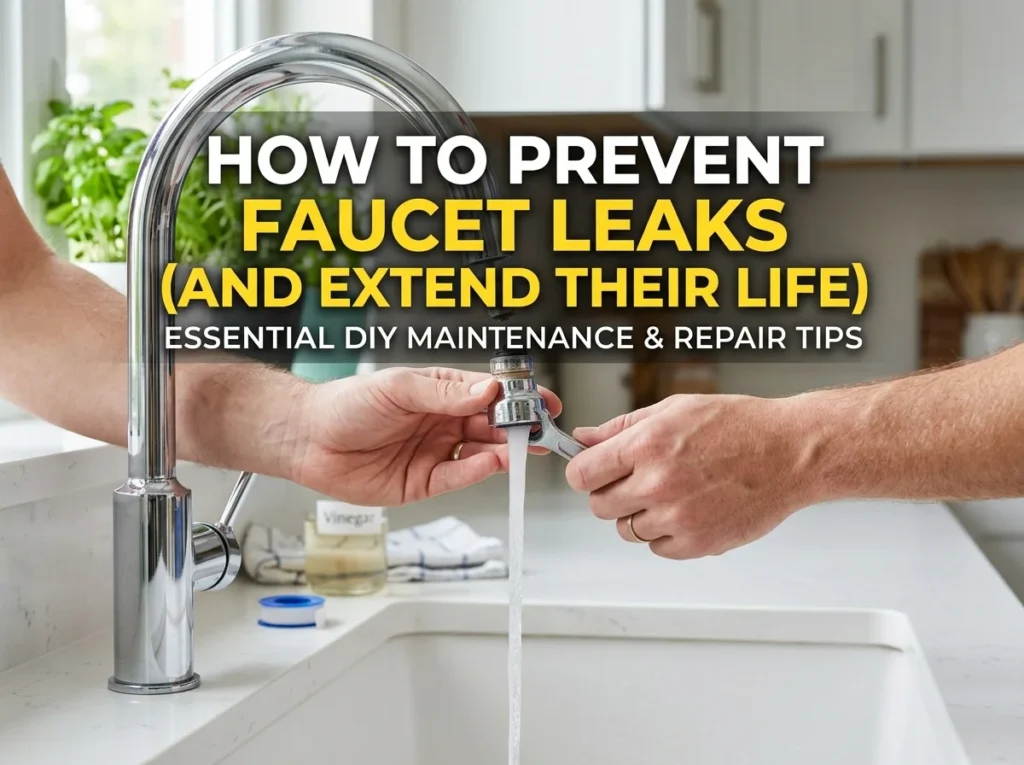
How to Prevent Faucet Leaks (and Extend Their Life)
Some leaks are preventable. Some aren’t. But maintenance helps.
Don’t turn faucets off hard. Gentle off. Forcing them tight damages the seal faster. Especially important with kids and guests. Teach people to turn gently.
Install water softener if you have hard water. Pittsburgh’s water is moderately hard. Softener reduces mineral buildup in faucets. Extends faucet life significantly. Worth it if you’re staying long-term.
Winterization. Before Pittsburgh winter, insulate exposed pipes if possible. Frozen pipes create pressure that damages faucets.
Regular cleaning. Clean aerators yearly. Prevents sediment buildup. Keeps water flowing right.
Replace supply lines occasionally. Those rubber hoses under the sink last 5-10 years. Replace them before they fail. Prevents the catastrophic leak that causes water damage.
These simple things extend faucet life. Prevent emergencies. Save money long-term.
Finding a Good Plumber in Pittsburgh
Not all plumbers are equal. You want someone reliable.
Licensed and insured. Pittsburgh requires licenses. Verify with Pennsylvania UCA. Insurance protects you if something goes wrong.
References. Ask for them. Call three past clients. Ask about responsiveness, quality, fairness.
Upfront pricing. Good plumbers tell you cost before work starts. Not during. Not after. Be suspicious of “we’ll see what it costs” plumbers.
Experience with bathroom fixture repair. Not all plumbers specialize in fixtures. Ask if they do faucet work regularly.
Warranty. Get workmanship warranty in writing. At least 30 days. Good plumbers stand behind work.
Availability. Can they come this week? Next week? How’s their response time? In Pittsburgh winters, fast response matters.
Emergency plumbers cost more. Nights and weekends cost more. But sometimes you need them. Know who to call.
Water Waste Prevention Beyond Faucets
Leaky faucet repair is one part of water conservation. But there’s more.
Toilets leak silently. Add food coloring to the tank. If it appears in the bowl without flushing, you’ve got a leak. Replace the flapper. Costs $15.
Shower heads. Old ones waste water. New low-flow heads save water without sacrificing pressure.
Running taps. Don’t leave water running while brushing teeth or washing dishes. Huge waste.
Full loads. Run dishwasher and laundry on full loads. One load at a time wastes water and energy.
Outdoor watering. Water in morning or evening, not midday sun. Less evaporation.
Conservation adds up. Every bit matters.
Common Mistakes People Make With Leaky Faucets
Don’t do these things.
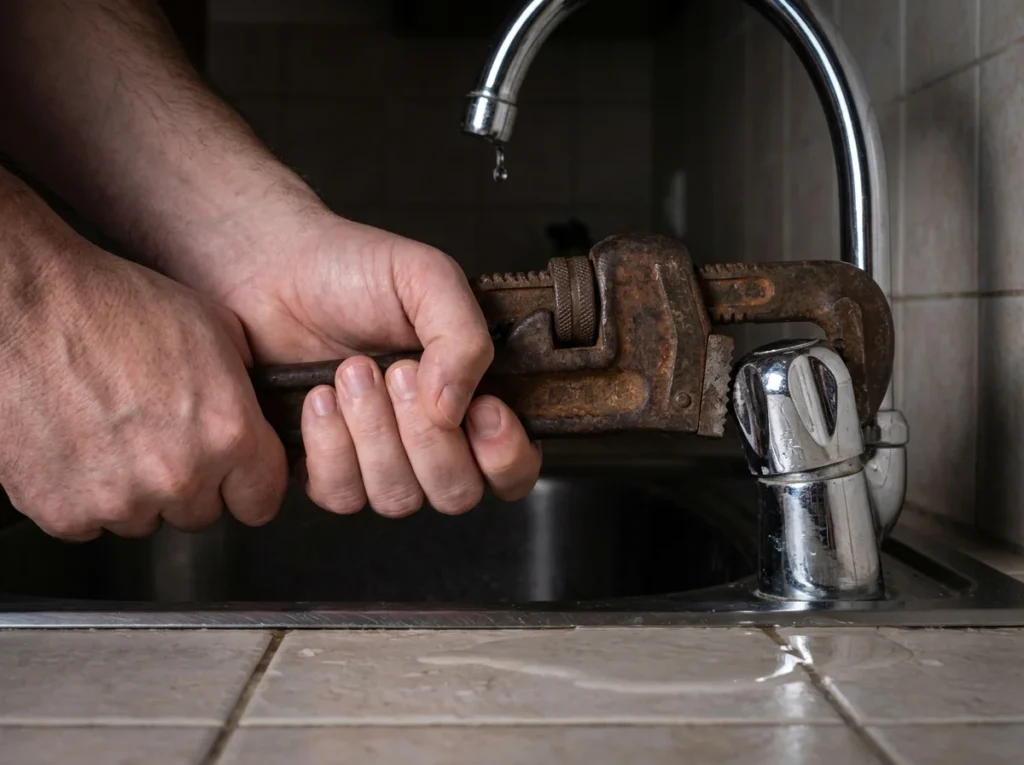
Ignoring small drips. “It’s just one drop.” No. That’s 2,700 gallons yearly. Fix it.
Over-tightening. You think tighter = better sealing. Wrong. Over-tightening damages the seal faster.
DIYing something you don’t understand. Ending up with a bigger flood? Not fun.
Cheap faucet replacement. You buy $40 faucet thinking you’re saving money. It leaks in two years. Bad choice.
Not turning off water supply. Before you work on anything, turn off water. Don’t assume you can handle it. Water goes everywhere.
Waiting too long. That slow drip becomes a flood. That small damage becomes water damage in walls. Fix it now.
Pittsburgh-Specific Plumbing Considerations
Pittsburgh’s older homes come with older plumbing. This matters.
Hard water. Pittsburgh water has dissolved minerals. Not dangerous. But it builds up in faucets. Causes leaks faster than soft water areas. Aerators need cleaning more often. Might want water softener if staying long-term.
Pittsburgh’s hard water doesn’t just affect faucets. It damages toilet fill valves and flappers too. Mineral buildup causes running toilets and constant refills. Learn about toilet repairs affected by Pittsburgh water and how to prevent them
Old galvanized pipes. Some Pittsburgh homes still have original 1950s galvanized steel pipes. These corrode over time. If you notice rust-colored water, that’s galvanized corrosion. Might need full replumb eventually. Not immediate, but worth knowing.
Frozen pipes winter. Pittsburgh gets real winter. Pipes in exterior walls freeze sometimes. When they thaw, leaks appear. Insulation helps. Dripping water in extremely cold nights helps. Know this risk in older homes.
Cast iron waste lines. Some old Pittsburgh homes have cast iron. These corrode and fail eventually. Usually not a faucet issue, but worth knowing about older plumbing in general.
These factors mean Pittsburgh homeowners might see plumbing issues faster than other regions. Maintenance matters more.
DIY Faucet Replacement (If You’re Ambitious)
Full faucet replacement is more involved than repair. But if you’re handy, doable.
Turn off water supply. Shut-off valves are under the sink. Turn both hot and cold clockwise. Test by turning faucet on. Should be nothing.
Remove the old faucet. Unscrew supply lines (they’re flexible hoses underneath). Use adjustable wrench. Old caulk around the base might need scraping. Unscrew mounting nuts. Remove old faucet.
Clean the sink top. Remove all old caulk and debris. Get it clean.
Install new faucet. Position it correctly. Screw mounting nuts underneath. Attach new supply lines. Make sure they’re not kinked.
Caulk the base. Use plumber’s caulk (silicone). Not regular caulk. Bathroom-specific.
Test for leaks. Turn water back on. Run hot and cold. Check underneath for drips.
This takes 1-3 hours for someone handy. If you mess up? You’ve got a bigger problem. Plumber fixes it for $200-$300 probably. So DIY only if you’re confident.
FAQ About Leaky Faucets
How much does leaky faucet repair cost in Pittsburgh?
Depends on complexity. Simple repair (tighten or washer replacement) with a plumber is $75-$150. Cartridge replacement runs $150-$300. New faucet installed is $200-$500 total. If you DIY simple stuff, cost is just parts ($5-$50). Plumbers are reasonable in Pittsburgh. Get three quotes to compare.
Can I fix a dripping faucet myself?
Some leaks yes. Tightening connections, cleaning aerators, replacing washers these are doable if you’re handy. More complex work like cartridge replacement or base leaks? Might need professional help. Know your limits. One mistake could make it worse.
How much water does a leaky faucet waste?
One drip per second equals 2,700 gallons yearly. One drip per 10 seconds equals 270 gallons. That’s a lot. Adds cost to your water bill. More importantly, it’s wasteful. Fix leaks as soon as you notice them.
What type of faucet do I have?
Look under your sink. If you see a ball-shaped part inside the faucet, it’s a ball faucet. If you see a cylinder, it’s a cartridge. If you see separate hot and cold handles, it might be washer-based or ceramic disc. Know your type before buying parts.
Should I repair or replace an old faucet?
If it’s 10-20 years old, repair makes sense. If it’s 30+ years old and parts are hard to find, replacement is smarter. Do the math. If repair costs $200 and new installed is $250, get new. Warranty and reliability are worth the extra $50.
How do I find a good plumber in Pittsburgh?
Ask neighbors and friends. Check reviews online. Verify licenses with Pennsylvania UCA. Get written quotes from three plumbers. Pick someone responsive, experienced, and fair-priced. Not cheapest. Not most expensive. Middle ground with good communication.
How often should faucets be replaced?
Well-maintained faucets last 15-20 years. Pittsburgh’s hard water means they might fail sooner. If you’re at 20+ years, replacement is reasonable. If it keeps leaking after repairs, replace it. One reliable new faucet beats constant repairs.