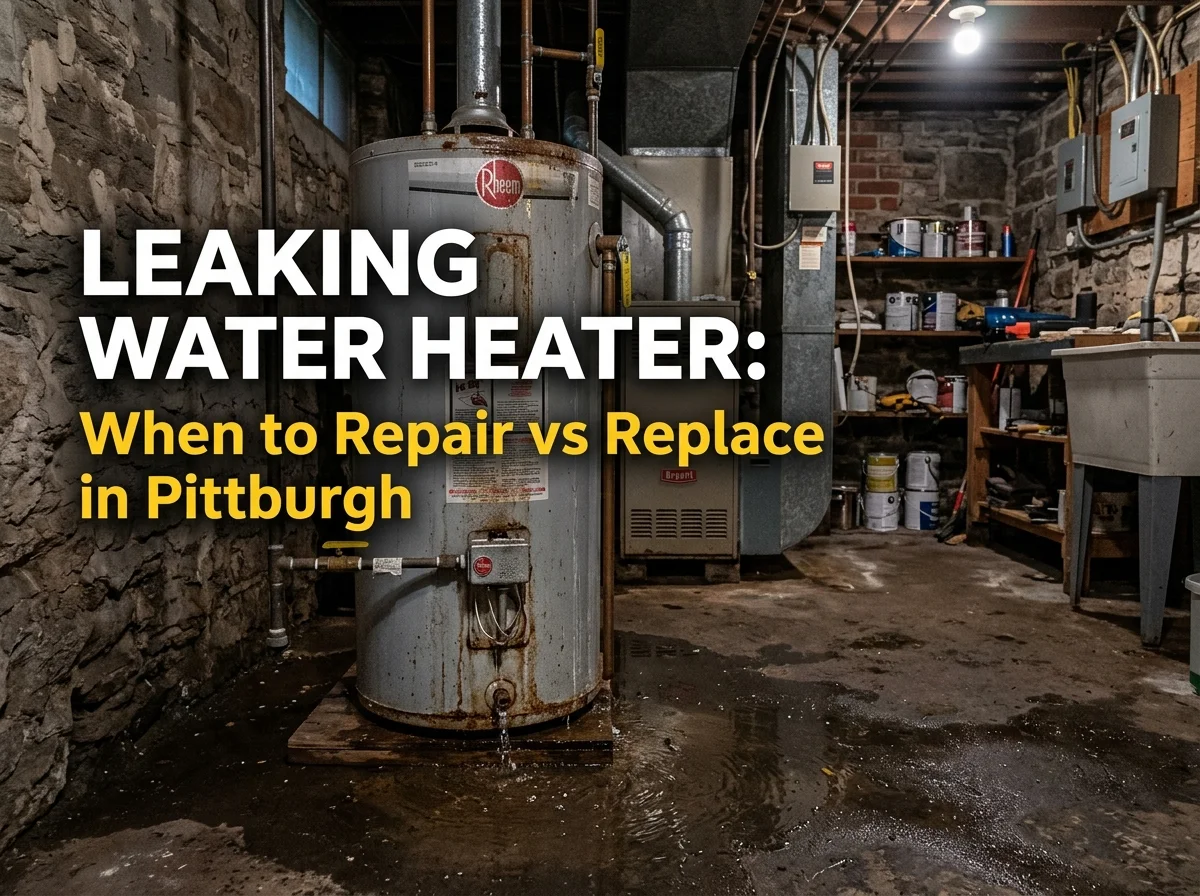
Your water heater is leaking water and you’re worried about damage. You need to understand leaking water heater repair options available to you. You’re wondering if repair or replacement is the better choice. Understanding water heater leak detection helps identify the actual problem. Water heater replacement might be necessary if damage is severe. Corrosion signs indicate your heater might be failing completely. Rusty water coming from taps suggests internal deterioration is happening. Safety concerns make professional assessment critical for your family. Pittsburgh’s water quality affects how quickly heaters corrode over time. This guide explains everything about leaking water heaters for homeowners. Real information. Pittsburgh specific. Smart decisions. By the end you’ll know whether to repair or replace.
Why Leaking Water Heater Repair Is Urgent Priority
Water Leaks Cause Thousands Of Dollars In Damage Quickly
Water damage spreads rapidly through your home’s structure. Foundation damage occurs from water pooling around base. Basement flooding happens quickly when heater leaks significantly. Wood rot develops in floors and walls from water. Mold grows rapidly in damp areas from water. Flooring damage occurs when water seeps into materials. Structural damage costs thousands of dollars to repair. Water damage insurance claims require professional documentation. Catching leaking water heater repair early prevents major damage. Quick action stops water damage before it spreads. Professional assessment determines severity of water damage quickly. Pittsburgh’s humidity makes water damage spread very fast.
Leaking Heater Is Fire And Electrical Hazard Always
Water near electrical components creates serious fire risk. Electrical shock hazard exists near standing water. Gas water heaters have additional fire hazard risks. Corrosion can cause unexpected rupture or explosion. Rust weakens metal creating structural failure risk. Standing water near furnace creates serious hazard. Safety concerns make immediate action necessary always. Do not ignore leaking water heater problems. Professional should assess heater immediately for safety. Pittsburgh fire code requires proper water heater installation. Fire safety is critical concern with leaking heaters.
Rusty Water Indicates Internal Heater Deterioration
Rusty water coming from hot tap indicates corrosion. Brown or orange water means rust inside heater. Water discoloration indicates heater is failing internally. Rust particles accumulate over time reducing lifespan. Water heater leak detection should happen immediately when you notice. Internal corrosion spreads and worsens quickly over time. Rust prevents proper heating and wastes energy. Leaking water heater repair might not be worthwhile option. Replacement is often better than attempting repair. Pittsburgh’s water chemistry causes rapid corrosion issues. Hard water accelerates rust development in heaters.
Temperature And Pressure Issues Develop With Corrosion
Corrosion signs include inconsistent water temperature problems. Temperature fluctuations indicate thermostat or heating element failure. Pressure relief valve might activate from high pressure. Safety valve leaking indicates pressure buildup inside tank. High temperature and pressure create serious hazard. Sudden leaks occur from corrosion perforation of tank. Pittsburgh heaters face accelerated corrosion from water quality. Corrosion weakens metal and creates failure risk. Professional assessment determines if heating element needs replacement. Temperature problems indicate serious internal deterioration happening.
Understanding Water Heater Leak Detection: Identifying Problems
Visual Inspection For Obvious Leaks And Seepage
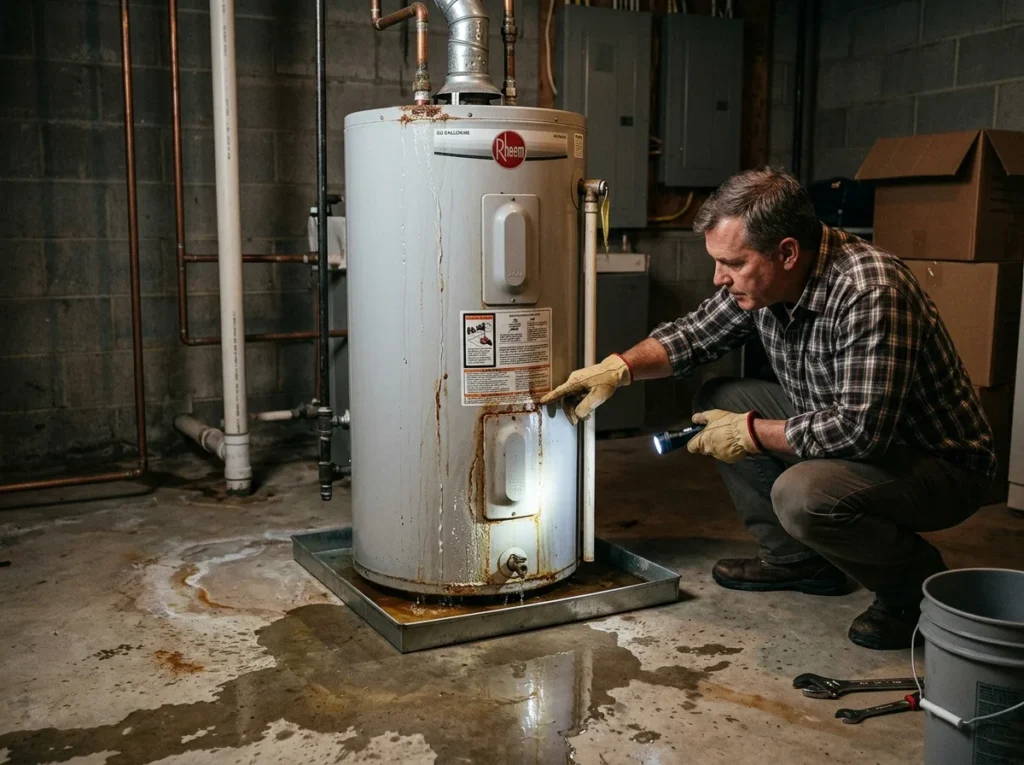
Professional inspection starts with visual examination of heater. Puddles around base indicate active leak present. Wet spots on floor suggest slow leak happening. Rust stains on tank indicate corrosion leaking. Water dripping indicates leak coming from valve. Corrosion around connections shows leak is developing. Professional checks all connections for water seepage. Base of tank is inspected for cracks. Tank walls are examined for weak spots. Water heater leak detection begins with visual assessment. Visible leaks require immediate professional attention always.
Pressure Relief Valve Testing And Assessment
Pressure relief valve releases excess pressure safely. Valve leaking indicates excessive internal pressure buildup. Leaking water heater repair might involve valve replacement. Small leak from valve might be repairable. Continuous dripping indicates valve replacement is needed. Pressure buildup suggests heating element malfunction. Professional tests valve function during inspection. Valve replacement costs less than full heater. Testing determines if valve is actual problem. Pittsburgh professionals know proper valve specifications. Valve testing is part of water heater leak detection.
Temperature And Pressure Gauge Evaluation
Pressure gauge reading indicates tank pressure level. High readings suggest internal corrosion or blockage. Gauge malfunction might cause false pressure readings. Professional interprets pressure readings accurately always. Temperature gauge shows actual heating performance. Inconsistent temperatures indicate element failure. Corrosion signs appear on old gauges often. Gauge replacement is inexpensive repair option. Professional testing determines if gauge is accurate. Gauge assessment is critical for safety evaluation. Pittsburgh water heater experts know proper specifications.
Testing Tank For Pinhole Leaks And Cracks
Pinhole leaks develop from internal corrosion weakening. Tank crack indicates heater failure is imminent. Stress fractures develop from pressure and corrosion. Professional uses specialized equipment for crack detection. Small leaks might expand suddenly into major leak. Crack repair is not possible for tank. Tank replacement is only solution for cracks. Professional assessment determines if cracks are present. Leaking water heater repair is impossible if cracked. Replacement is necessary when cracks are found. Pittsburgh professionals know when replacement is required.
Corrosion Signs And Indicators Of Aging Heater
Rust Accumulation On Tank Exterior Surface
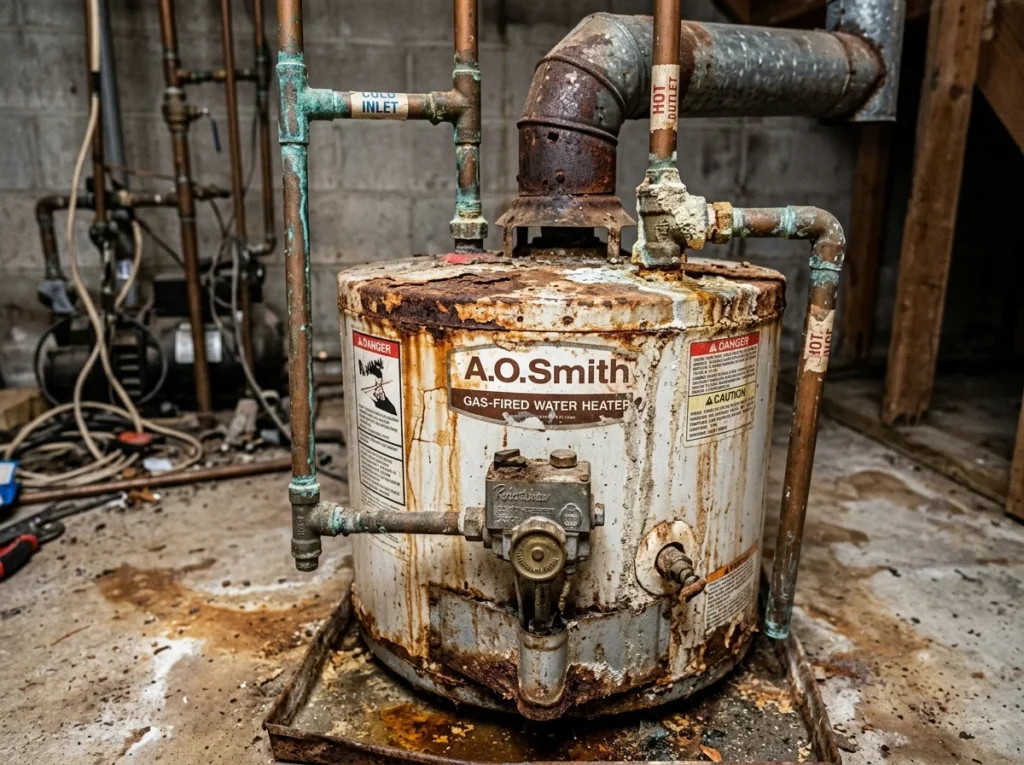
Visible rust on tank indicates corrosion happening. Surface rust suggests protective coating is failing. Heavy rust indicates heater is nearing end. Rust spreading rapidly indicates accelerated corrosion. Corrosion signs include rust colored water dripping. Rust stains around base indicate slow leak. Professional assessment determines extent of corrosion. Paint peeling from tank indicates moisture damage. Rust in corners is common corrosion location. Water heater leak detection includes rust inspection. Pittsburgh’s humidity accelerates rust development on heaters.
Sediment Buildup And Discolored Water
Sediment accumulates inside tank over many years. Discoloration indicates sediment and rust mixing. Rusty water contains rust particles and sediment. Discolored water affects water quality and taste. Sediment reduces heating efficiency significantly. Flushing removes some sediment temporarily. Heavy sediment indicates heater age and wear. Discolored water suggests internal deterioration happening. Water heater leak detection includes sediment assessment. Professional flushing removes accumulated sediment. Sediment buildup indicates replacement is approaching.
Brittle Tank And Weakened Metal Structure
Old tanks become brittle and weak from corrosion. Metal thinning occurs from internal rust exposure. Structural integrity is compromised over time. Weakened tank can rupture without warning. Corrosion signs include metal brittleness and deterioration. Professional assessment determines structural integrity. Ultrasonic testing measures remaining tank thickness. Thin walls indicate replacement should happen soon. Brittle metal cannot withstand pressure safely. Pittsburgh water causes accelerated brittleness in tanks. Structural failure is possible if ignored.
Water Heater Replacement Versus Repair Decision
When Repair Is Possible For Leaking Heater
Pressure relief valve leak might be repairable. Valve replacement costs one hundred to three hundred dollars. Connection leaks might be tightened to stop leak. Small seals can be replaced without full replacement. Minor corrosion around connections is repairable sometimes. Age under ten years might justify repair. Single component failure is repairable option. Professional determines if repair is worthwhile. Small leaks caught early might be fixable. Leaking water heater repair is possible sometimes. Cost benefit determines best course of action.
When Replacement Is Better Than Repair Option
Heater over fifteen years old should be replaced. Multiple leaks indicate complete system failure coming. Extensive corrosion means replacement is necessary. Large cracks mean replacement is only option. Rust in water indicates replacement is needed. Major corrosion throughout tank means replacement. Heater failing heating function needs replacement. Repair costs approaching replacement cost mean replace. Professional recommends replacement for most old heaters. Water heater replacement is often best solution. Pittsburgh professionals know when replacement is necessary.
Cost Comparison Between Repair And Replacement
Valve repair costs one hundred to three hundred dollars. Seal replacement costs two hundred to five hundred dollars. Tank flushing costs one hundred to two hundred dollars. Full water heater replacement costs one thousand to three thousand. Labor for replacement adds five hundred to one thousand. Disposal of old heater adds one hundred dollars. Replacement with energy efficient model saves money. New heater provides ten plus year warranty. Old heater repair has no warranty provided. Cost analysis determines best financial decision. Pittsburgh prices for replacement vary by type.
Energy Efficiency And Long Term Savings
Old heaters waste significant energy inefficiently. New energy efficient models save money monthly. Savings on utility bills justify replacement cost. Tankless heaters save thirty percent energy. Tank heaters newer models save ten percent. Payback period is five to seven years. Long term savings make replacement worthwhile. Pittsburgh utility costs make efficiency important. Energy rebates sometimes available for replacement. New heaters provide better performance. Water heater replacement provides financial benefits.
Safety Concerns With Leaking Water Heaters
Fire Hazard From Electrical Contact With Water
Water near electrical components creates fire risk. Short circuits can occur from water exposure. Electrical fire starts from corroded connections. Gas heaters have additional fire hazard risk. Professional assessment is critical for fire safety. Do not attempt repairs near electrical parts. Water must be cleaned up immediately always. Electrical panel must be checked for damage. Fire extinguisher should be nearby as precaution. Safety concerns make professional assessment necessary. Pittsburgh fire code requires professional inspection and repair.
Gas Leak Hazard From Corroded Gas Line
Gas heaters have corrosion risk on gas line. Gas smell indicates potential gas line leak. Gas leaks create explosion and fire hazard. Carbon monoxide poisoning risk exists from improper venting. Professional must assess gas line condition. Do not use appliance if gas smell detected. Evacuate home if strong gas smell present. Gas company should inspect if suspected leak. Proper ventilation is critical for safety. Safety concerns with gas heaters are serious. Pittsburgh requires professional gas line inspection.
Structural Damage And Flooding Risk
Water flooding causes structural damage to home. Foundation can be damaged by standing water. Mold growth creates health hazard for family. Electrical system damage from water exposure. Drywall damage occurs from water seepage. Flooring damage happens from prolonged water contact. Cleanup costs are substantial for water damage. Insurance might not cover all damage. Prevention through repair is critical priority. Leaking water heater repair prevents flooding damage. Water damage mitigation is urgent priority.
Health Hazards From Mold And Water Damage
Mold grows rapidly in damp environments. Mold spores cause respiratory health problems. Asthma symptoms worsen from mold exposure. Allergic reactions occur from mold presence. Elderly and children are most vulnerable. Mold remediation is expensive and invasive. Prevention through prompt leaking water heater repair is critical. Water damage leads to mold growth quickly. Pittsburgh’s humidity accelerates mold development. Health protection requires prompt action always.
Rusty Water And Water Quality Issues
Causes Of Rusty Water From Hot Tap
Internal corrosion produces rust particles in water. Tank rust flakes into water supply. Corrosion signs appear as rust colored water. Metal oxidation creates rust in water. Old tank interior deteriorates into water. Water heater leak detection includes water testing. Rust indicates heater is failing internally. Replacement is only solution for rusty water. Pittsburgh water quality contributes to rust. Professional water testing confirms rust presence.
Health Impact Of Rusty Water Consumption
Rusty water is unpleasant but usually not toxic. Iron rust causes discoloration and bad taste. Rust stains bathroom fixtures and tubs. Laundry gets rust stains from rusty water. Skin irritation might occur from bathing. Taste and smell of water is bad. Water filters might help temporarily. Complete water heater replacement solves problem permanently. Pittsburgh residents notice rust in water. Professional recommends replacement for water quality.
Filtering And Temporary Solutions
Water filters remove some rust particles temporarily. Whole house filter improves water quality. Faucet mounted filters are quick solution. Filters must be replaced regularly often. Filtering does not solve underlying problem. Temporary solution while awaiting replacement. Professional recommends replacement not filtering. Water heater replacement is permanent solution. Filters are not cost effective long term. Replacement provides clean water permanently.
FAQ About Leaking Water Heater Repair
How do I know if my water heater is leaking?
Puddles around base indicate active leak. Wet floor near heater suggests leak. Water dripping from tank indicates leak. Rusty water coming from tap indicates problem. Unusual sounds suggest internal damage. Pressure relief valve dripping indicates issue. Professional inspection confirms leak presence. Schedule inspection immediately if suspected.
Should I repair or replace leaking water heater?
Heater over fifteen years old needs replacement. Multiple leaks indicate replacement is needed. Extensive corrosion means replacement is better. Repair costs approaching replacement cost mean replace. Corrosion signs suggest replacement is coming. Small leaks might be repairable sometimes. Professional determines if repair is possible. Consider age and repair costs always.
How much does water heater replacement cost in Pittsburgh?
Standard tank heater costs one thousand to three thousand dollars. Tankless heater costs two thousand to four thousand dollars. Labor adds five hundred to one thousand dollars. Disposal adds one hundred dollars to cost. Total replacement costs one thousand five hundred to five thousand. Prices vary by heater type and size. Get quotes from multiple contractors. Pittsburgh prices are competitive regionally.
What causes water heater to leak suddenly?
Corrosion perforation creates sudden leak. Safety concerns make sudden leaks dangerous. Temperature and pressure buildup causes failure. Metal thinning from corrosion causes rupture. Old age causes sudden failure. Pressure relief valve malfunction causes leak. Professional assessment determines cause quickly. Sudden leaks require immediate attention always.
Is leaking water heater safe to continue using?
No, leaking heater is not safe. Safety concerns make continued use dangerous. Fire hazard exists near electrical parts. Water damage continues while using heater. Flooding risk increases with continued use. Stop using heater immediately if leaking. Turn off heater and call professional. Do not attempt repair yourself. Professional must assess safety immediately.
How can I prevent water heater from leaking?
Regular water heater leak detection catches problems. Annual inspection finds issues early. Proper maintenance extends heater life. Flush heater annually to remove sediment. Check pressure relief valve regularly. Maintain proper water pressure. Pittsburgh water quality affects lifespan. Professional maintenance prevents premature failure. Prevention saves money long term.